Every credential, every photo, every certificate. The visual evidence of eight years building real capacity between China and Latin America — not in theory, but in operation, commercial execution, and institutional recognition.
This page exists because the words "China–LATAM strategist" mean nothing until they are demonstrated. Here are the official certificates from China’s Ministry of Commerce, the diplomas, the SIAL booths, the pallets of fresh fruit bound for Shanghai, the United Nations reports. One by one.

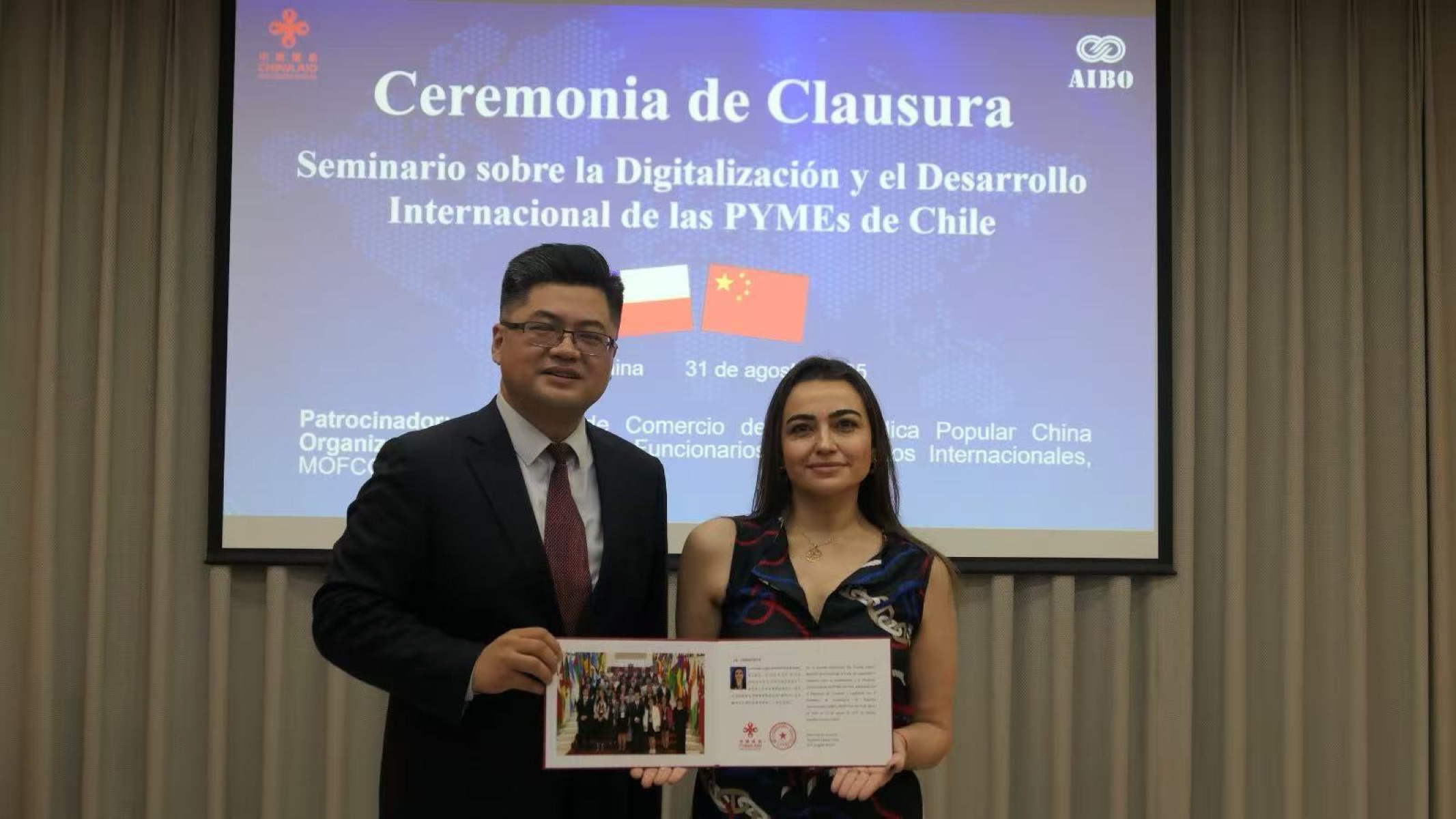
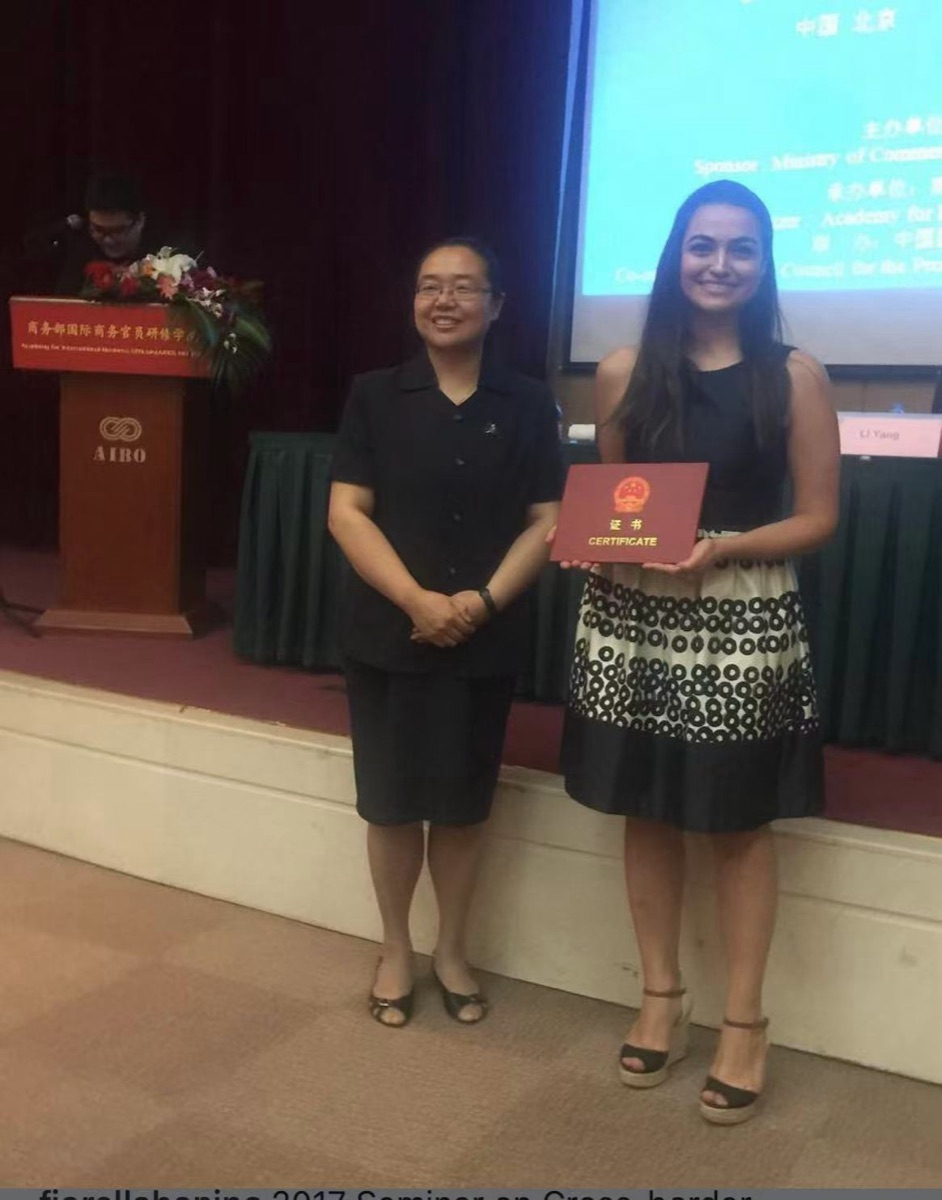
My real connection with China began in 2017, when the Academy for International Business Officials (AIBO), a body of the Chinese Ministry of Commerce (MOFCOM), invited me to the seminar on the One Belt, One Road initiative in Beijing.
AIBO is not an open trade forum. It is a selective training program the Chinese government uses to build long-term relationships with international professionals it considers strategic. Receiving the certificate at this podium means I entered through a door the Chinese State opens with discernment.
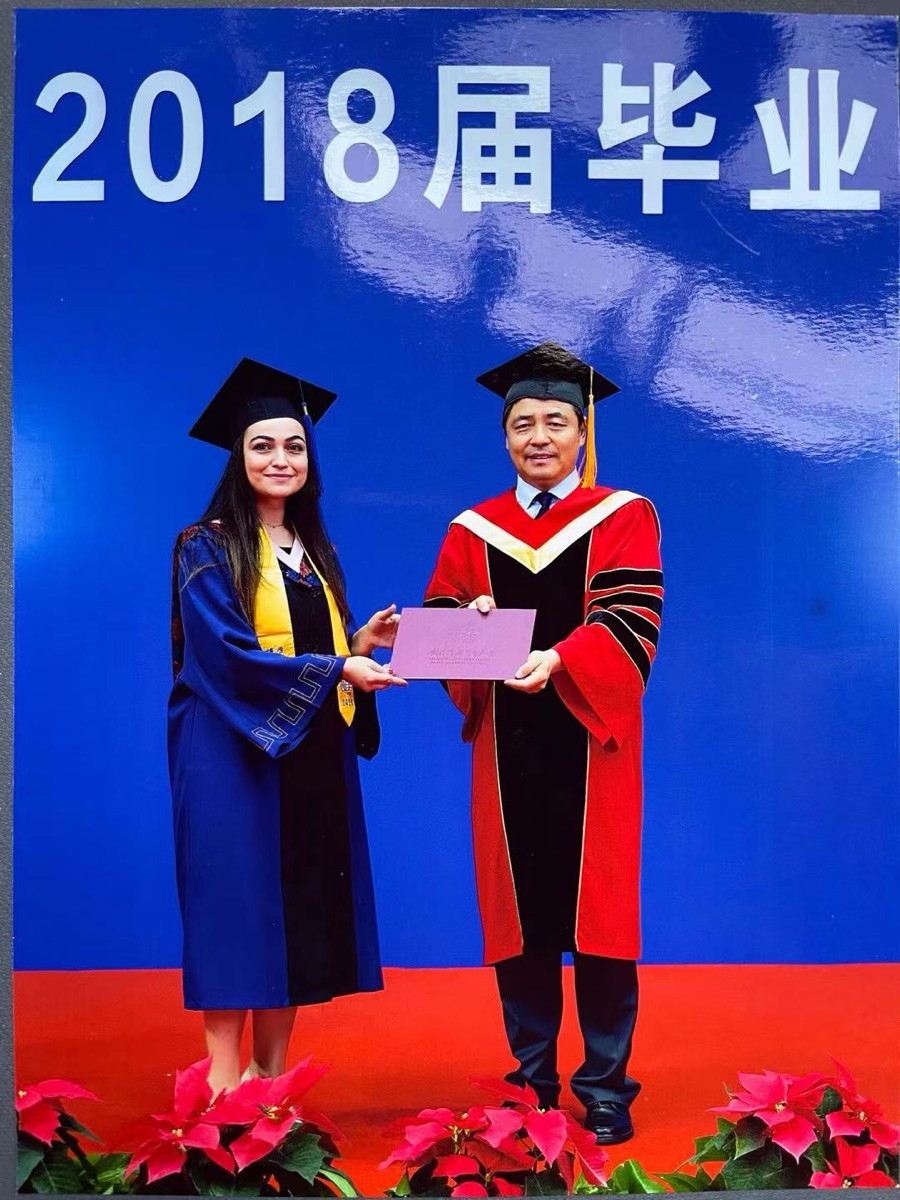
My foundation comes from Chile: Industrial Civil Engineer from Universidad Adolfo Ibáñez (UAI), complemented with a Diploma in Business Intelligence focused on IT from Universidad de Chile. That combination of engineering + business intelligence + technology is what later made it possible for me to understand the Chinese digital ecosystem with technical judgment, not just commercial.
On that foundation, a year after the AIBO invitation, I returned to Beijing as a full-time student. The University of International Business and Economics (UIBE) is the institution that historically trains China’s foreign trade cadres. I completed the MBA with a full MOFCOM scholarship.
This matters because the UIBE network is dense, vertical, and operates in Chinese. My classmates are now executives at JD.com, SOEs, and international consultancies. When I return to Beijing, I return home.

Before China, before UIBE, before Baidu, there was PwC — PricewaterhouseCoopers, one of the four global consulting and audit firms. I worked there between graduating from UAI and leaving for Beijing.
That stint at a Big Four is what gave me the analytical rigor and process discipline I would later apply to the Chinese ecosystem. PwC teaches you how to read balance sheets, risks, and operations — skills that, in China, are the difference between closing a deal and losing US$200,000 due to a due-diligence error.

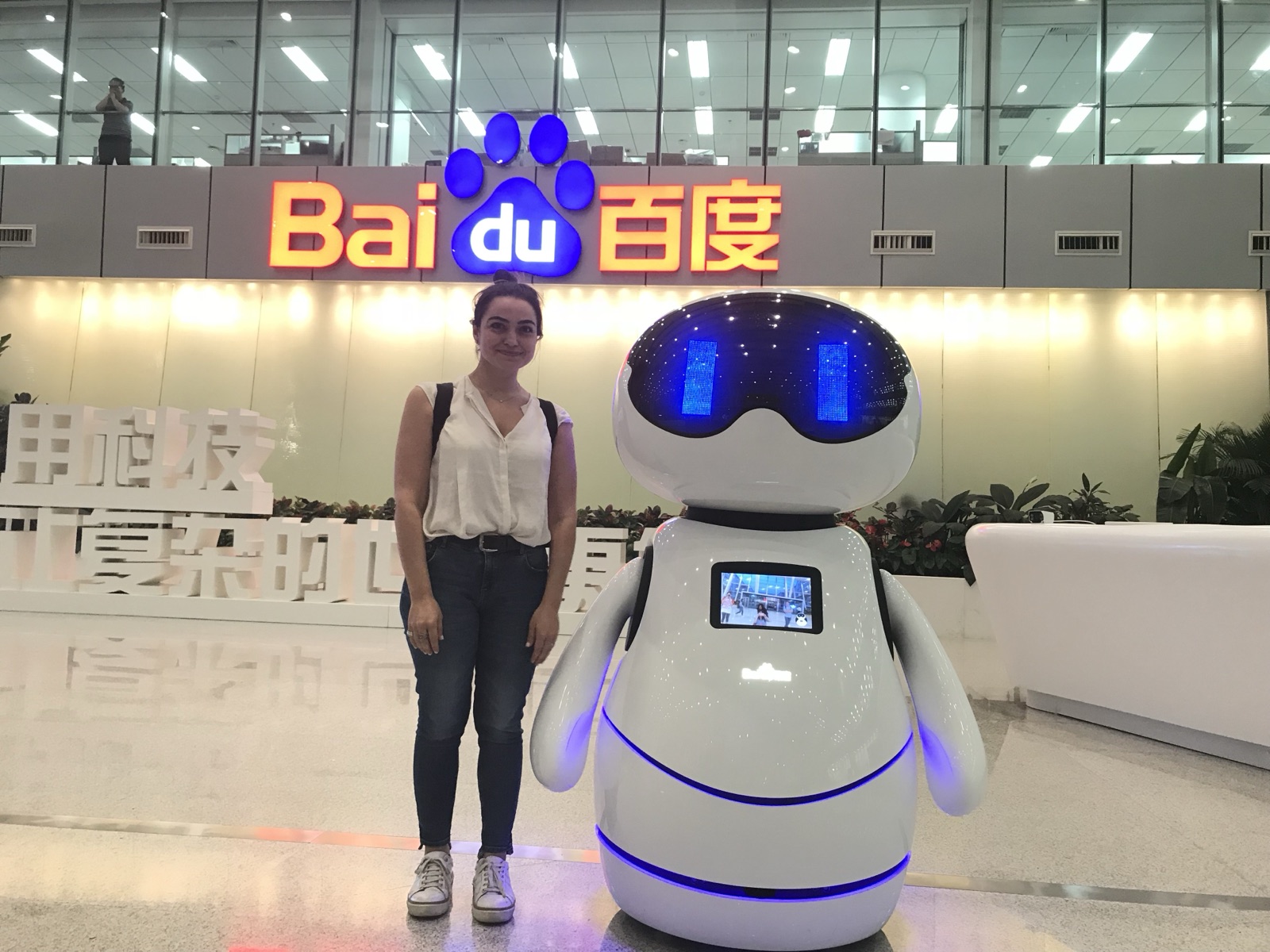
During my time in China I worked inside Baidu — China’s answer to Google and one of the country’s four big tech firms (BAT: Baidu, Alibaba, Tencent). This is not a name you pick up in an international marketing class; it is a company that operates under China’s regulatory framework, where the rules of the game are different.
Being inside the building, seeing the service robots, reading KPIs in Chinese, understanding how digital product is conceived from Beijing rather than Silicon Valley — that cannot be replaced by a course. It is field knowledge.

In 2025 AIBO–MOFCOM invited me a second time. This time to the "Seminar on Digitalization and International Development of Chilean SMEs" — closing the loop: eight years after my first invitation, the Chinese government selected me specifically to represent Chile in its cooperation programs.
That is what matters: this is not a one-time event. It is a sustained institutional relationship with China’s Ministry of Commerce, maintained for nearly a decade.

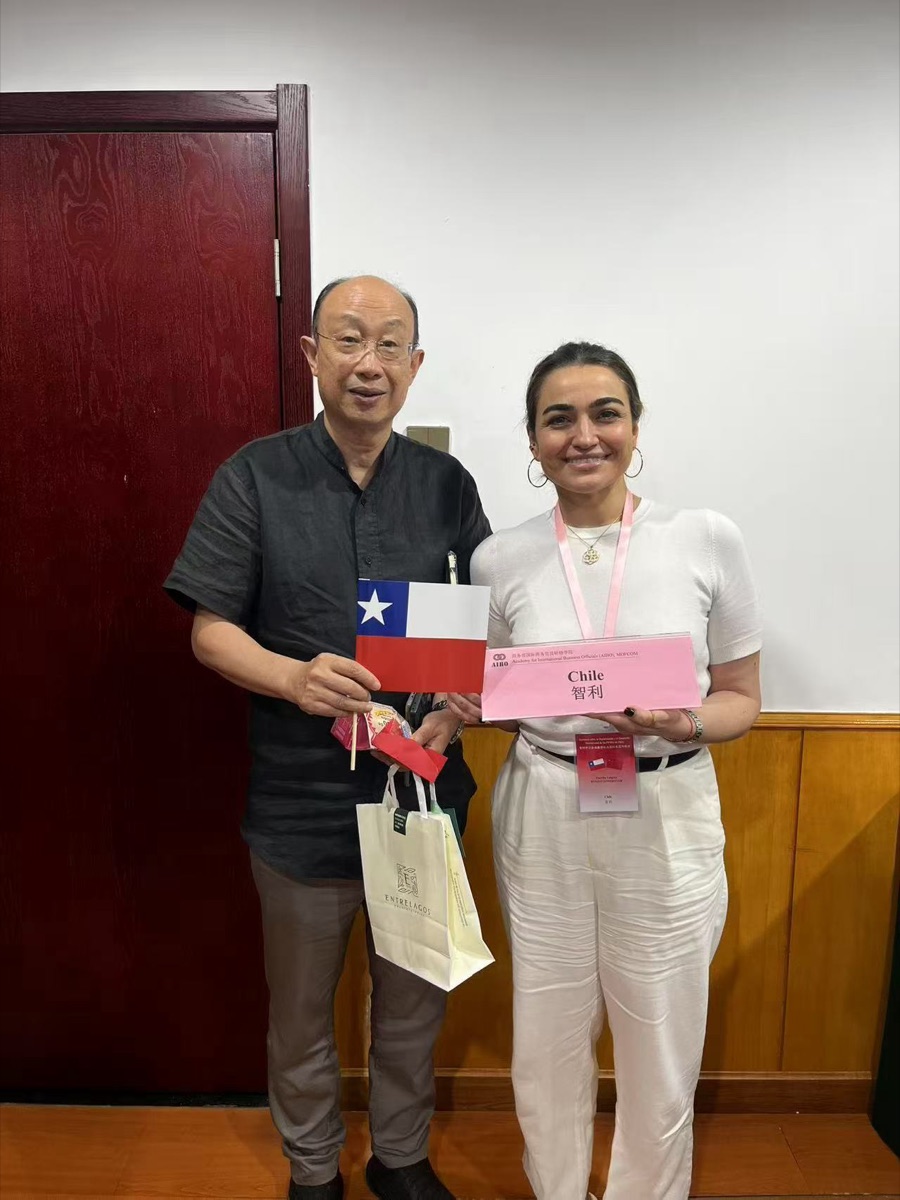
In the same 2025 edition, I formally received the plaque designating Chile (智利) within the AIBO program. Receiving it from the program director means signing a symbolic commitment: during that edition, you represent your country within the Chinese system.
This translates into real bilateral relationships — AIBO faculty, program peers from other countries, MOFCOM officials who attend the ceremonies. It is the foundation on which long-term institutional work is built.

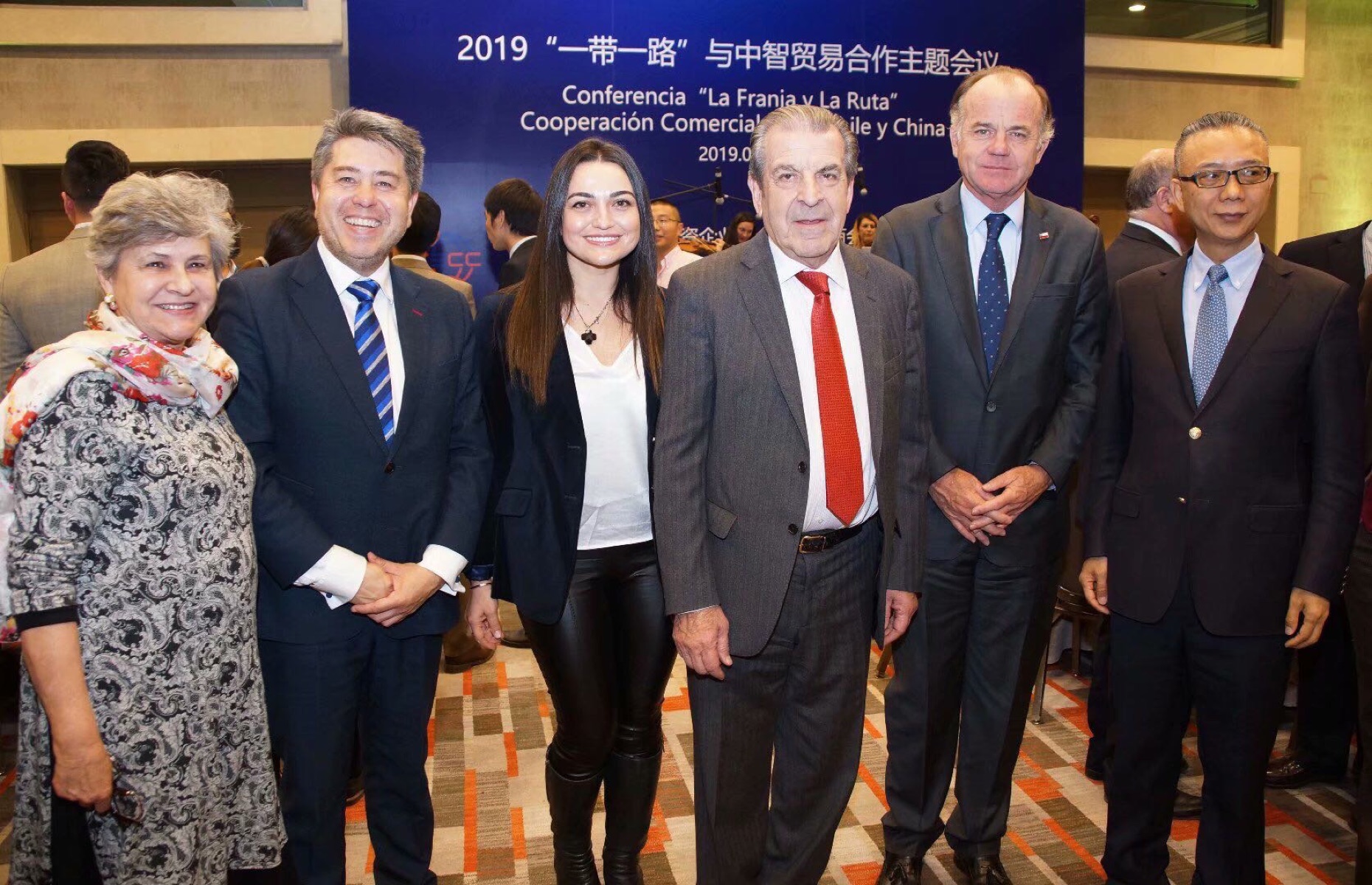
Back in Chile in 2019, I was part of the official conference on Chile–China commercial cooperation, alongside former President Eduardo Frei Ruiz-Tagle, former cabinet ministers, and ambassadors. The photo was taken by the event’s press team.
I am in that photo not as a token observer: I was there because by then I was already operating commercially between the two countries, and that is the conversation the Chilean public sector needs to hear from people who are actually selling products in China.

The Chilean government — through CORFO and the Ministry of Agriculture — funded CHINAexpert within the Transforma Alimentos program to open the China channel to Chilean SMEs. This is not a marketing alliance: it is public funding with KPIs and compliance reporting.
For a Chilean SME from Arica, Parinacota, Maule, or anywhere, reaching the Chinese consumer alone is practically impossible. CHINAexpert is the vehicle the Chilean public system recognized for that work.

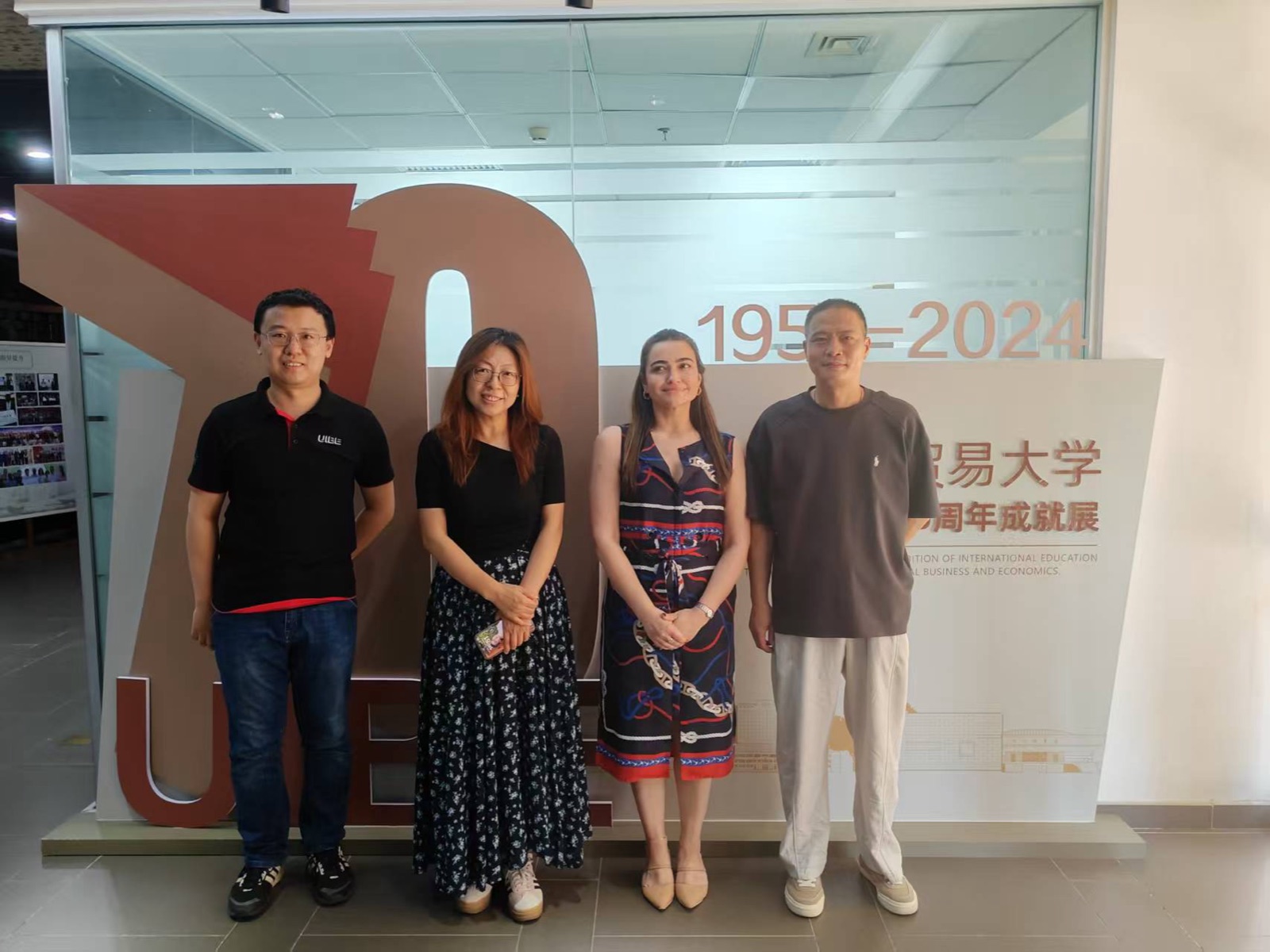
In 2024 UIBE celebrated its 70th anniversary. The university invited alumni from around the world to the commemoration, and I went back. The photo in front of the anniversary monument — alongside professors and classmates — is not personal marketing. It is verification that I am still part of that network, a decade later.
For the clients who hire me, this translates into something concrete: when a procedure needs to be moved, a meeting secured, or a Chinese regulation interpreted — I have someone to ask.

In 2020 I founded Los Andes Beltroad Export. Not with my own capital, not with a Chilean loan: with US$2 million of Chinese capital invested in Chile.
Before that came four years of guānxì — the patient construction of trust-based relationships with Chinese partners. Four years of dinners in Beijing, WeChat messages, factory visits, meetings that at the time led nowhere. That is what the Chinese system calls guānxì: the trust network that precedes business. And at the end of the fourth year, capital on the table.
To grasp the weight of this: LATAM–China operations rarely have Chinese capital upstream. Almost all are Chileans selling to China. I founded it the other way around: Chinese capital, Chilean operational capability, proprietary brand, bilateral operation. It is one of the few configurations of that kind led by a Latin American woman.

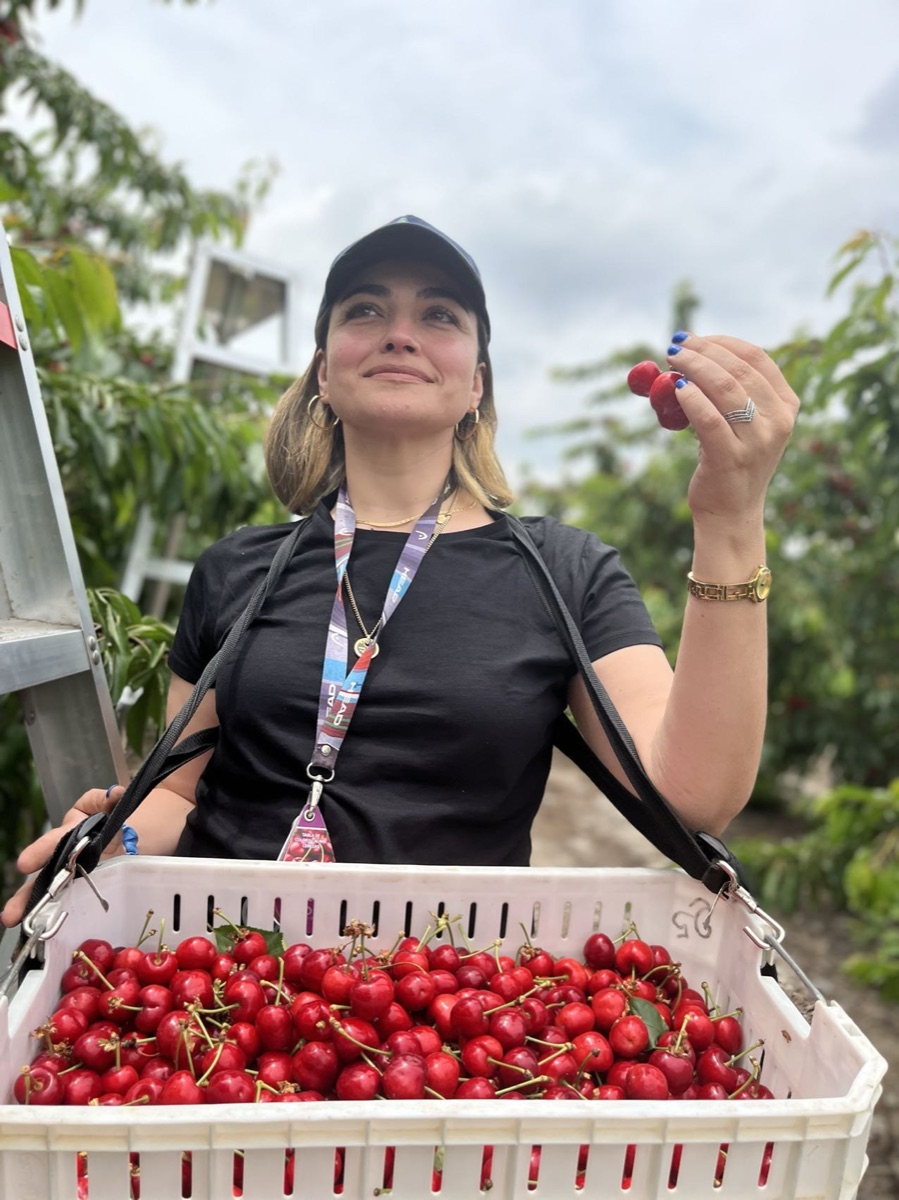
With the company founded and the capital at work, the first link came in: the Chilean orchards. Royal Dawn, Santina, and Lapins are the three key varieties I export to China. Royal Dawn and Santina open the season (October–December); Lapins reaches the peak of Chinese New Year — the moment of the year when Chilean cherry commands the highest shelf price.
This photo matters because I own the chain from the origin. I am not a middleman receiving product at a port; I know who grows it, how it is cared for, what caliber is selected, when it is harvested so it arrives firm in Shanghai.

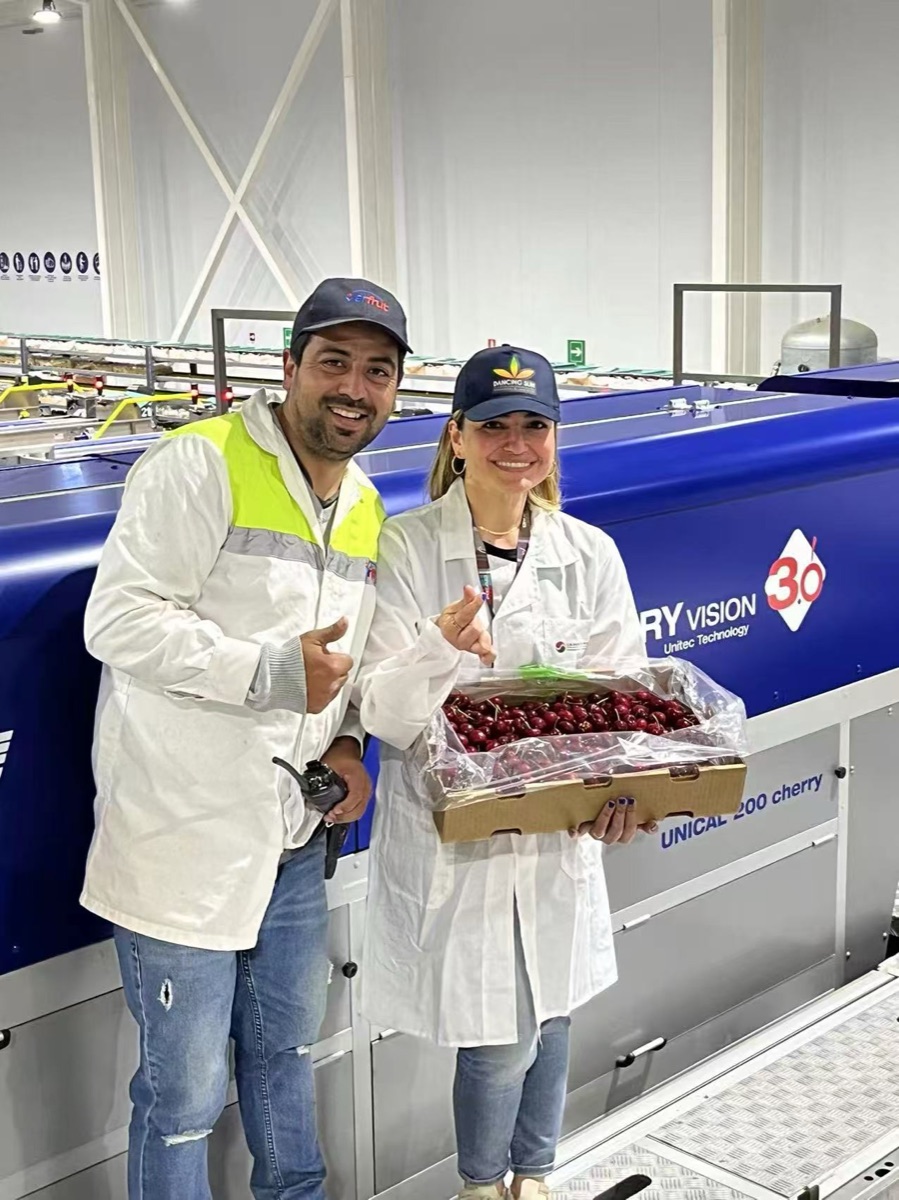
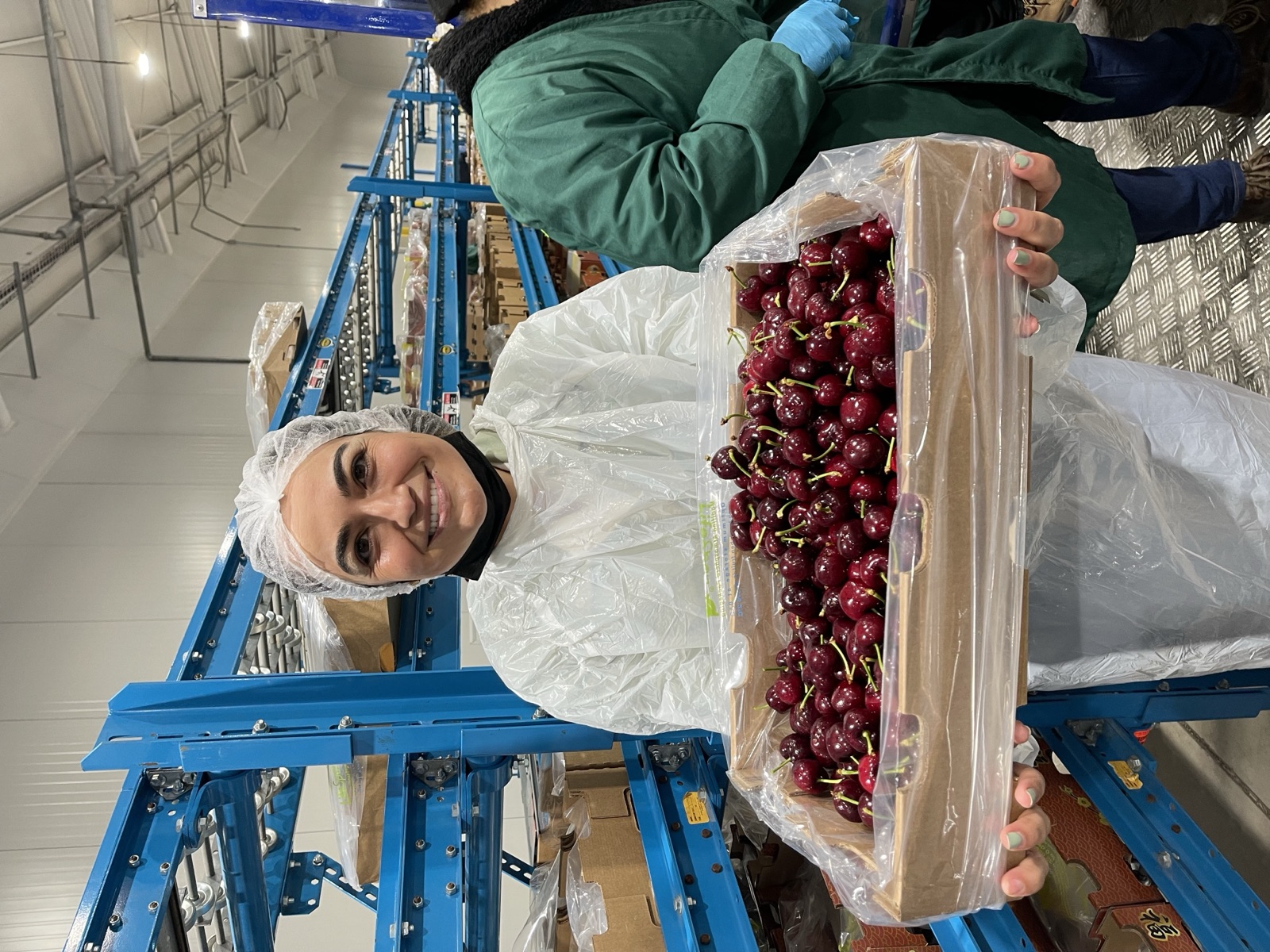
From there the cherry passes through Unitec’s Cherry Vision 3.0 — one of the world’s most advanced optical sorting machines. The system grades each cherry by size, color, sugar level, and surface damage. The cap I wear reads Dancing Sun, my proprietary brand.
This is the filter that separates fruit fit for the premium Chinese consumer from the rest. Cherries shipped under the Dancing Sun brand are the ones that passed through this system. Consistent quality — not as a sample, as an operation.

The white uniform is not decorative. To touch fresh cherry destined for China you enter the clean zone with gown, hairnet, and boots. And you have to be there when the line is running — not in the morning, not in the office; at the exact moment of packing.
That oversight is what later translates into zero rejections at Chinese customs. Rejections cost thousands of dollars per container. That is why I am in the plant.

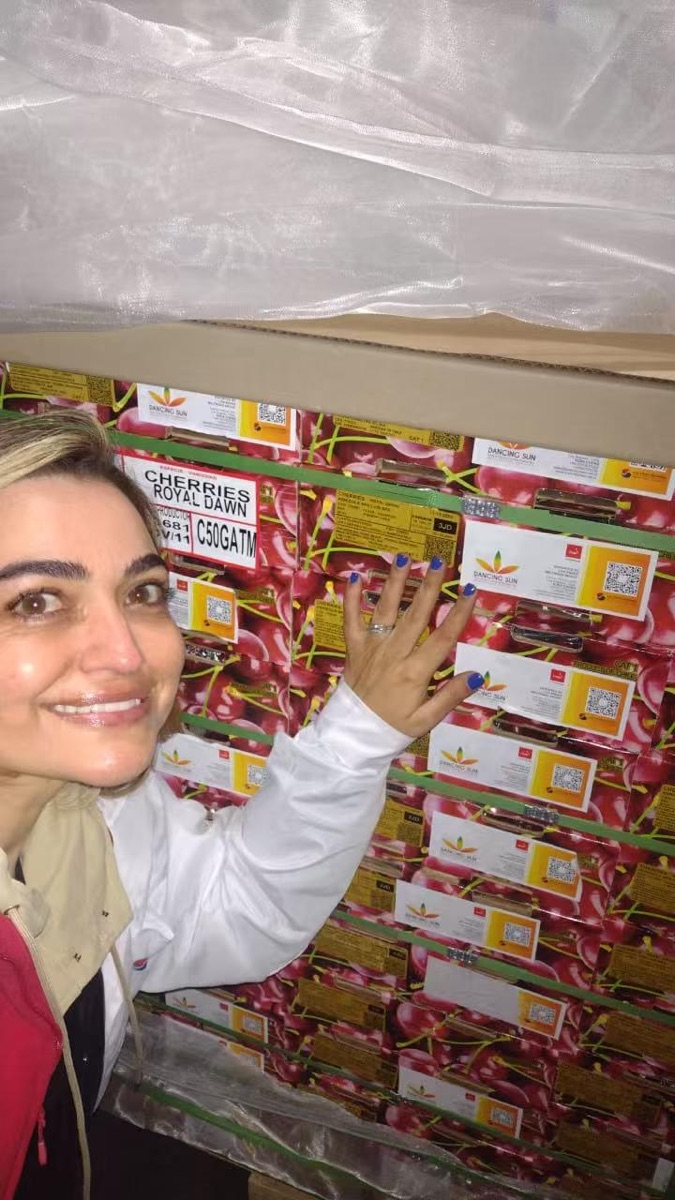
Dancing Sun is the proprietary brand I built for the premium Chinese consumer. Royal Dawn, Santina, and Lapins varieties, shipped by air — cherry express: Santiago → Shanghai in under 30 hours, preserving the firmness and flavor that command premium pricing.
Each box branded with a scannable QR code. Each pallet identified and traceable. This is not bulk export: it is direct-to-consumer sale to the Chinese end consumer with proprietary branding. The Dancing Sun brand appears on my cap when I enter the plant — because that is the quality guarantee that travels with every pallet.

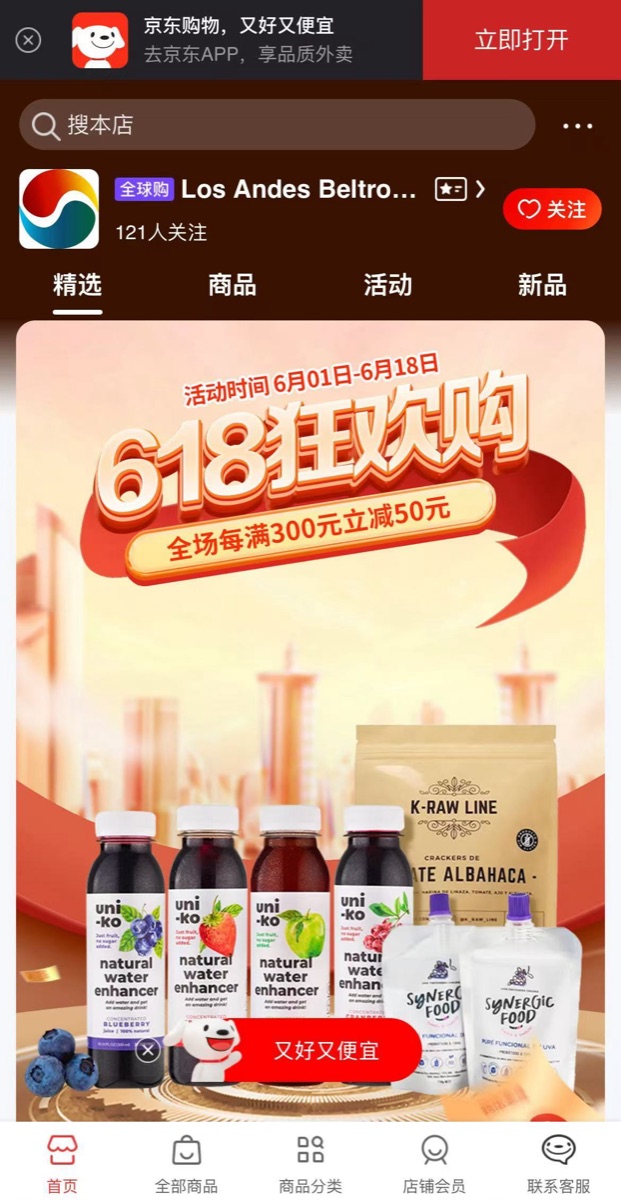
My cross-border e-commerce (CBEC) operation in JD Worldwide selling Chilean products directly to the Chinese consumer was distinctive enough that UN ESCAP documented it as a case study in its 2024 report on Chile–China cross-border e-commerce. The report was authored by a UIBE professor — the same university where I completed my MBA on a MOFCOM scholarship.
Closing the loop: a Latin American who passes through the Chinese education system, opens a commercial operation in China, and the Chinese academic system uses her as a case. That cannot be bought or hired.

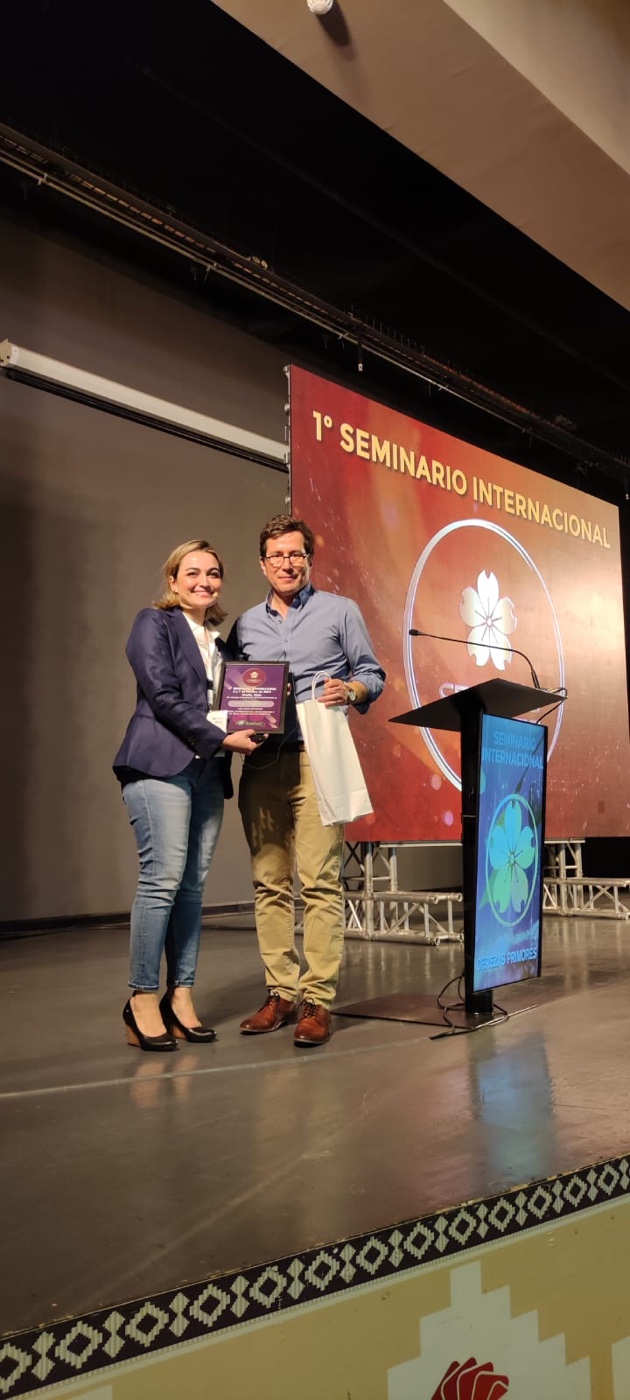
Chile’s cherry sector hosts an annual technical gathering for those working with early-season varieties — the ones that reach China first and command the highest prices. At the inaugural International Seminar on Early-Season Cherries (Cerezas Primores), I received a formal recognition for my export work under the Dancing Sun brand.
This matters because it comes from within the industry itself: it is not an award I could submit to, but one the Chilean cherry community handed out for real contribution to opening the China channel.

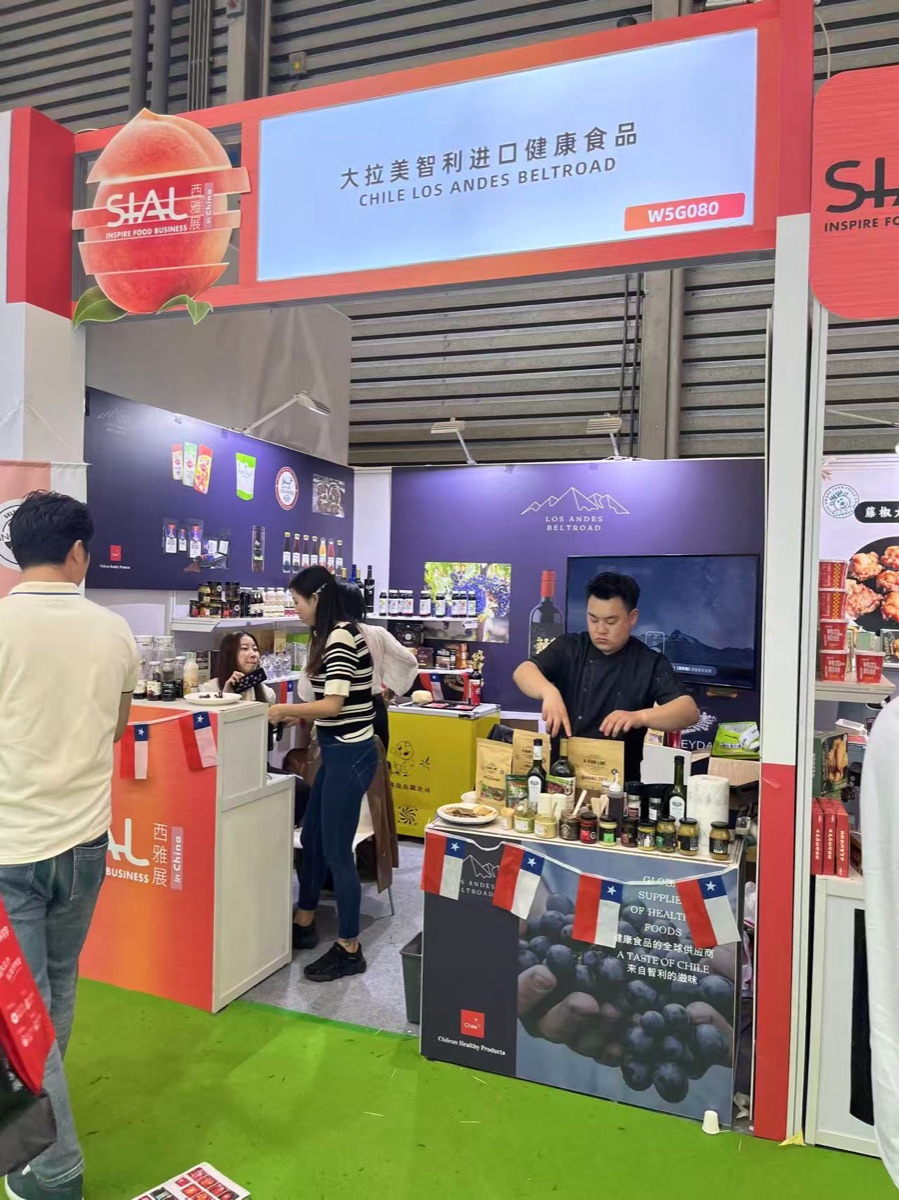
SIAL Shanghai is Asia’s most important food trade show. More than 150,000 professional visitors over five days. Having your own booth means selecting products, hiring and training bilingual staff, setting up the operation, and sustaining five back-to-back days closing meetings.
The Los Andes Beltroad booth with the Chilean flag wasn’t for show. It was to sell. Every product on display — wines, honey, oils, gourmet items — represented a client I continued working with afterwards.

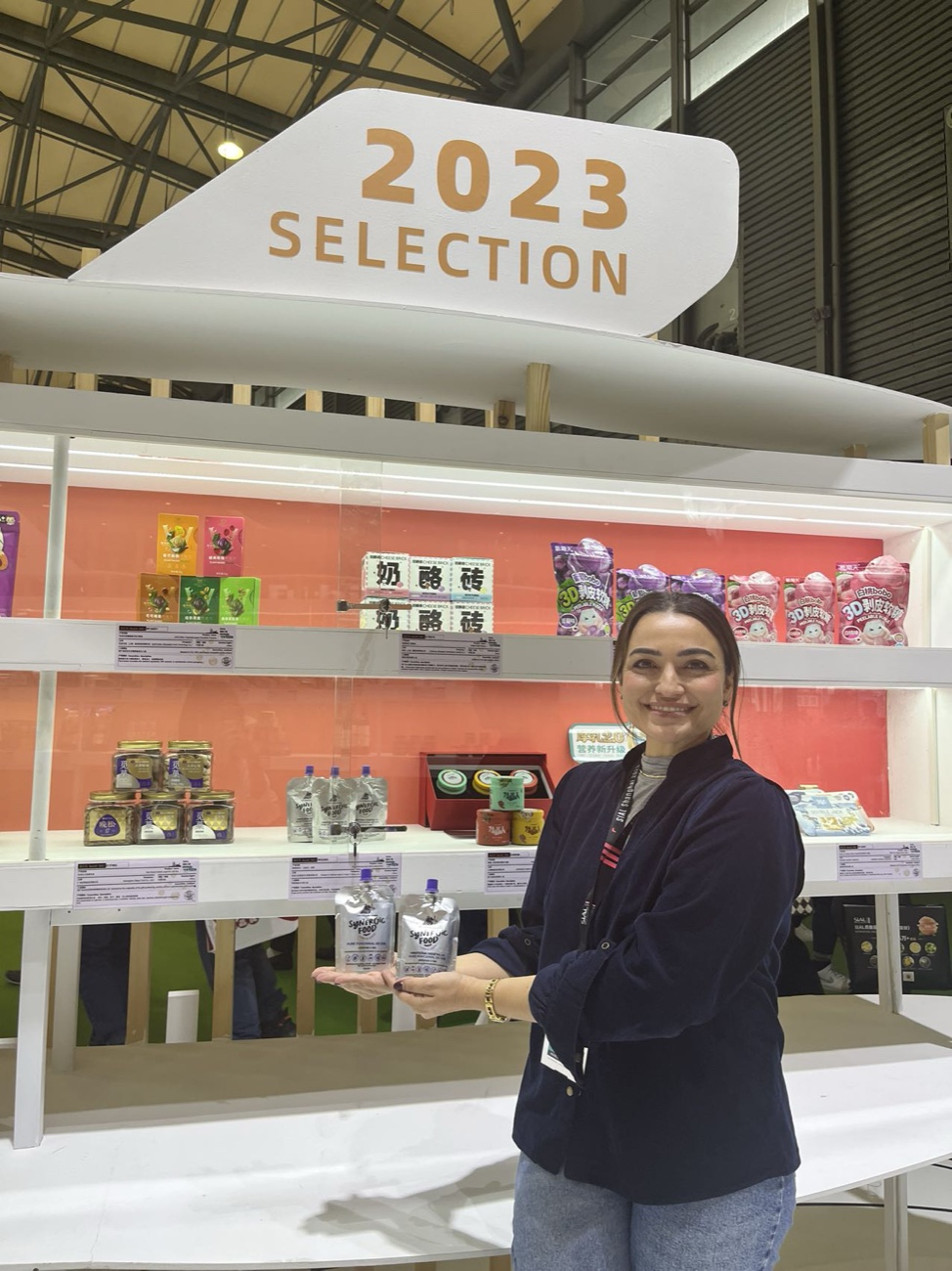
In the same SIAL 2023 edition, I submitted to the Innovation Selection competition — the trade show’s award for the year’s most innovative product — a pouch of Chilean grapes from my client Synergic Food.
And we won. What matters about this award is not only the seal: it validates a hypothesis. I had read the Chinese consumer: they wanted healthy fruit, in a modern format, with Chile origin identity. I picked the right product. The SIAL jury — all Chinese — confirmed it.
For future clients, this award translates into something simple: I know which Chilean product has a real shot in China, before you lay the first stone.

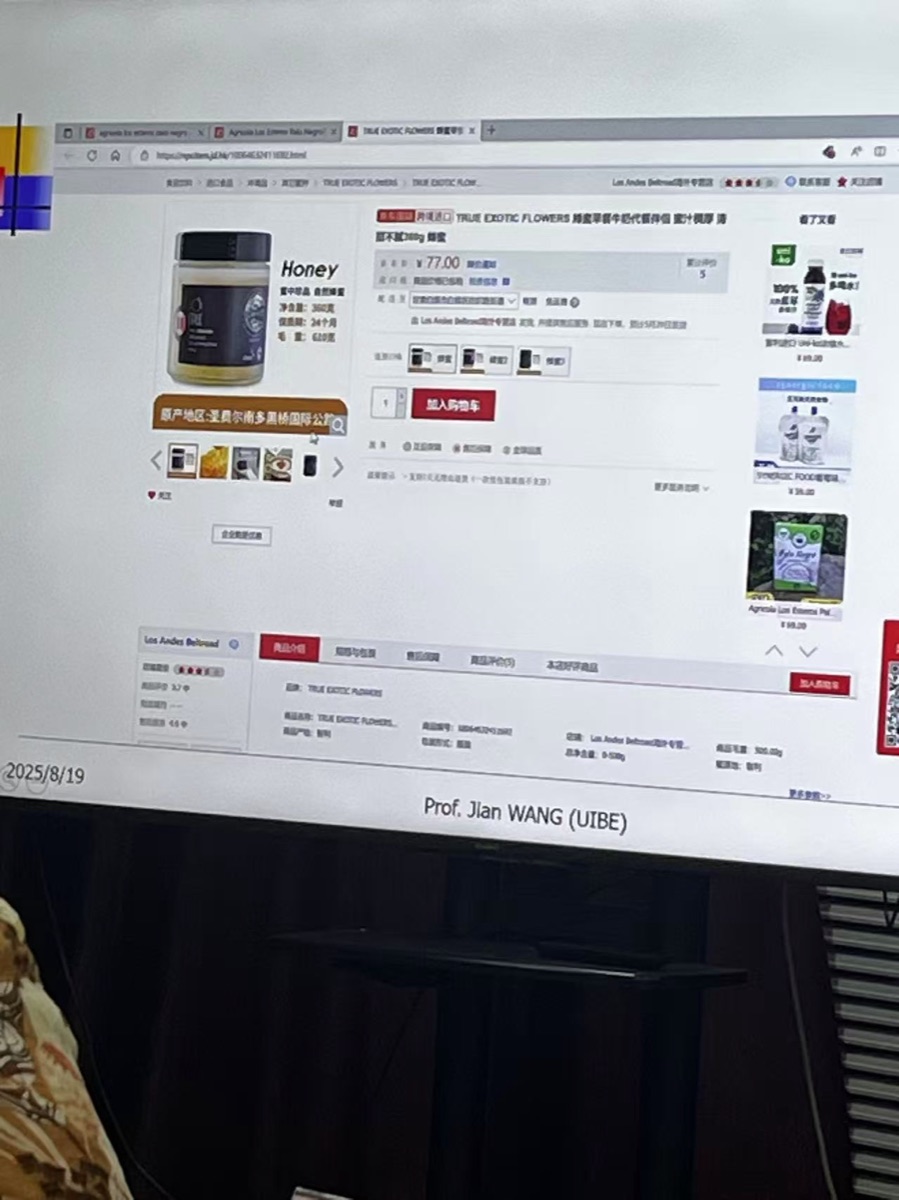
In 2024, the United Nations Economic and Social Commission for Asia and the Pacific (UN ESCAP) published a Knowledge Product titled "Understanding every step of cross-border e-commerce: exporting food products from Chile to China". The report was authored by a UIBE professor.
The case study used to build the analysis was my operation in JD Worldwide with Los Andes Beltroad and Dancing Sun. The screen in the photo shows that research, with the product catalog displayed on JD.
When a United Nations body chooses to document your work, those stop being your own words and start being official documentation.
Every one of these credentials translates into operational capacity: institutional network, technical knowledge of Chinese processes, an active proprietary brand, awards validated by Chinese juries, academic documentation by the United Nations.
Conectar conmigo